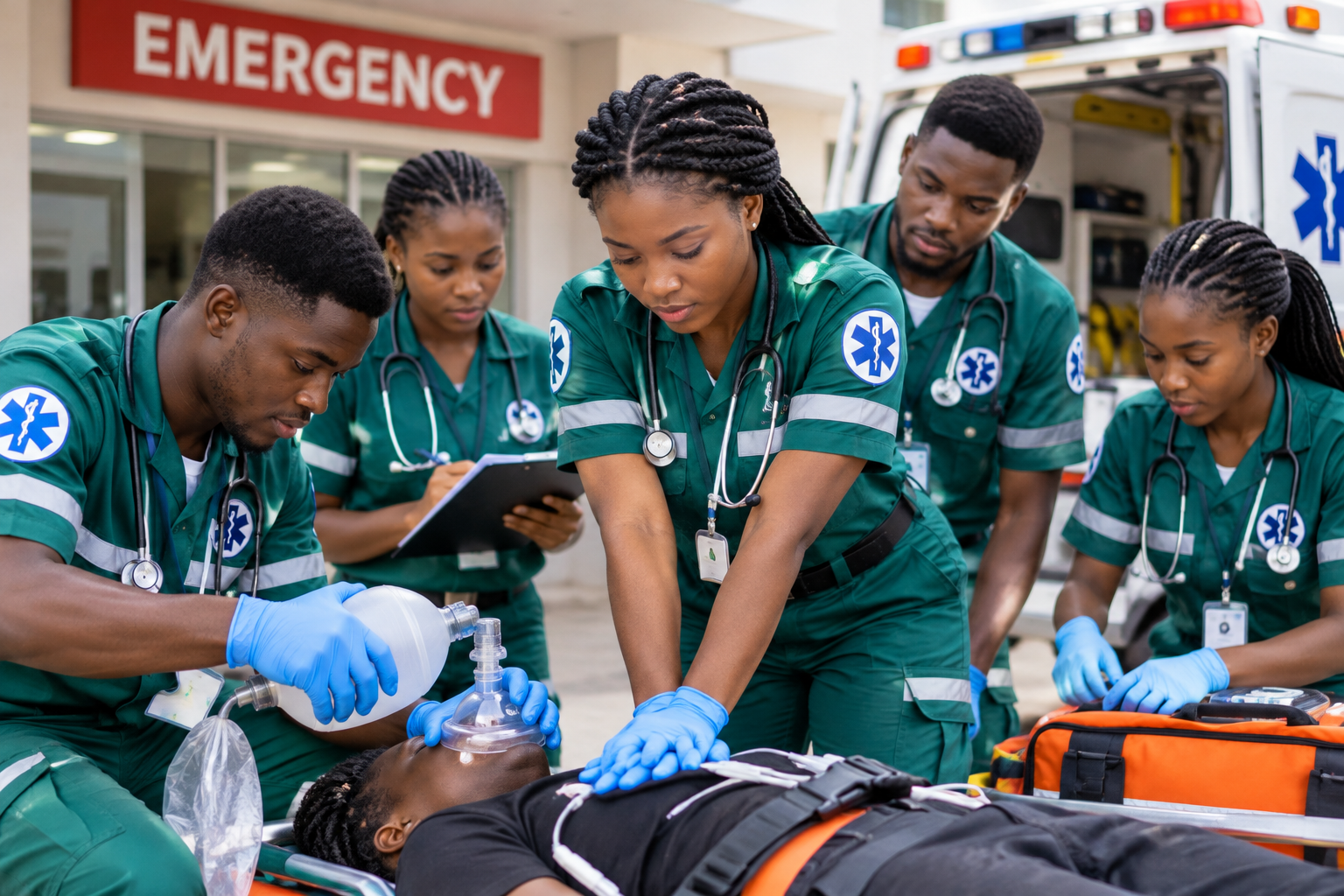
Emergencies can happen without warning. Road accidents, sudden illness, injuries and other urgent situations require people who can respond quickly, remain calm and provide appropriate support while further medical care is being arranged.
Students interested in emergency response can explore Paramedic and Emergency Care at Rhema Ijoko College of Health Science, Management and Technology.
What Is Paramedic and Emergency Care?
Paramedic and Emergency Care focuses on responding to urgent health situations. It introduces students to the principles of emergency assessment, first response, patient support, safety and communication during stressful situations.
Depending on the programme structure, areas of learning can include:
- Basic emergency assessment
- First aid principles
- Patient handling and safety
- Emergency communication
- Trauma awareness
- Basic life-support concepts
- Infection prevention
- Teamwork during emergencies
- Referral and transportation principles
Why Emergency-Care Training Matters
The first few minutes of an emergency can be very important. A trained responder needs to assess the situation, protect the patient from further harm, communicate clearly and know when more advanced medical support is required.
Emergency-care education also teaches discipline. Students must learn to follow procedures, work within their level of training and avoid taking actions that are outside their competence.
Skills Students Need to Develop
Emergency care requires more than physical ability. It also depends on judgement, communication and emotional control. Students should work on:
- Staying calm under pressure
- Listening and observing carefully
- Following instructions and safety procedures
- Working effectively in a team
- Communicating with patients and relatives
- Maintaining accurate information
- Respecting patient privacy and dignity
- Recognising the limits of their training
Who May Enjoy This Programme?
Paramedic and Emergency Care may appeal to students who want a practical healthcare pathway and are comfortable learning how to respond in fast-moving situations.
It can be suitable for people who are responsible, observant, physically active, compassionate and willing to practise skills repeatedly until they can perform them carefully and confidently.
Career Direction and Further Training
Emergency-care knowledge can be relevant to ambulance and emergency response services, hospitals, clinics, industrial safety environments, community emergency programmes and other settings. However, the title, scope of practice and professional registration required for emergency medical roles can differ between employers and regulatory systems.
Students should therefore check the current professional pathway linked to their qualification and understand whether additional certification, supervised practice or further study is required for the role they want.
Why Study at Rhema Ijoko College?
Rhema College offers health-related programmes alongside management, science and technology courses. Students can use this multidisciplinary environment to develop academic knowledge while also building teamwork, communication and professional discipline.
For an emergency-care student, taking practical training seriously is especially important. Skills should be learned carefully, practised responsibly and used only within the level of training and authority permitted.
Prepare to Respond With Knowledge and Confidence
If you are interested in emergency medical response and want to build skills that can help you act responsibly when urgent situations occur, Paramedic and Emergency Care may be worth exploring.
Contact Rhema Ijoko College for current admission requirements and programme details before applying.
Emergency medical roles can be regulated. Applicants should confirm the programme's current approval, qualification and professional pathway directly with the College and relevant authorities.
Comments
0 approvedRegister for a student portal account or sign in if your account is already active. All comments are moderated before publication.
Register Student Login