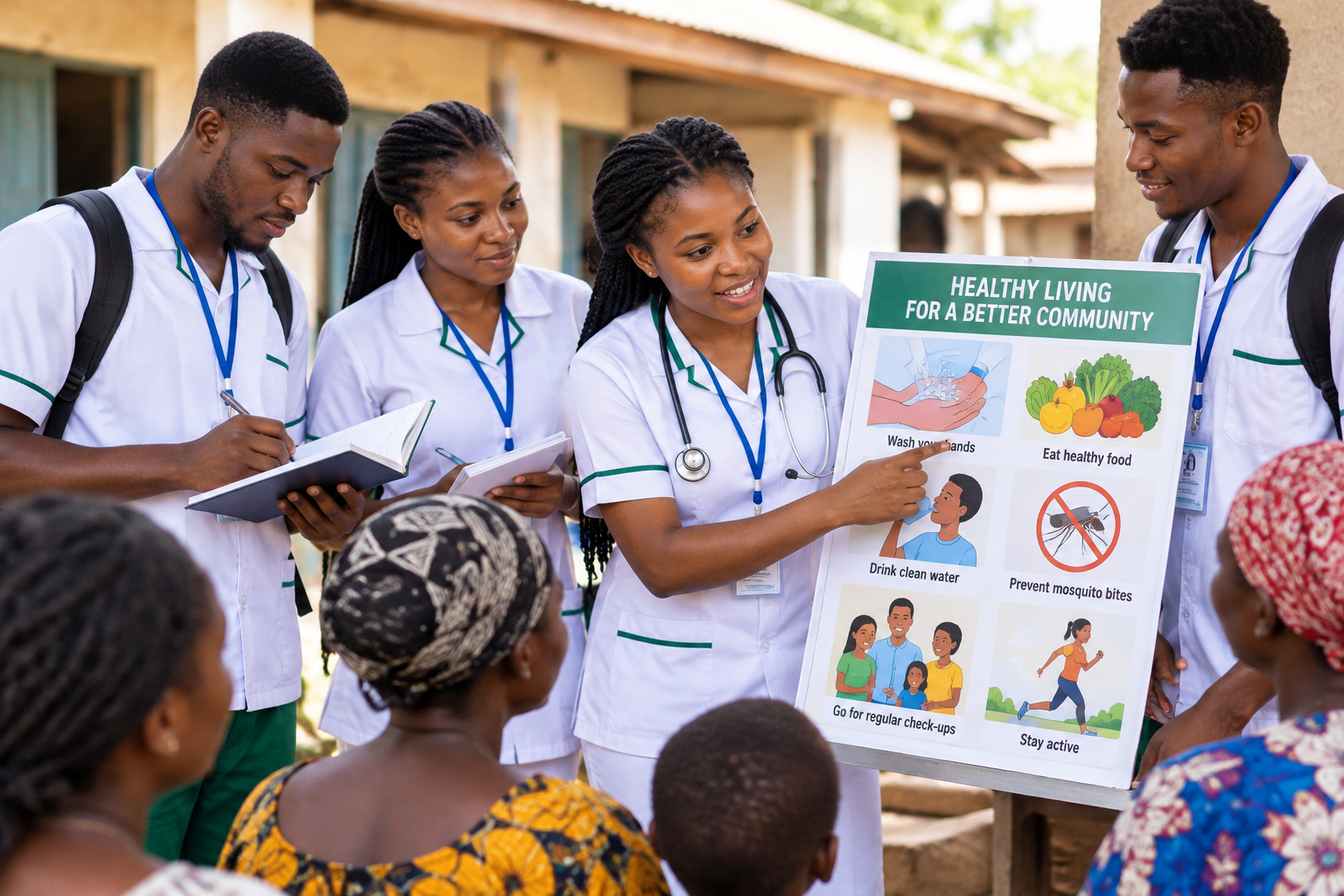
Community Health is an important part of healthcare because many health problems can be prevented or managed more effectively when people receive support close to where they live. The field connects health education, prevention, basic healthcare services and community participation.
At Rhema Ijoko College of Health Science, Management and Technology, Community Health is one of the health-related study areas available to students who want to develop knowledge that can be useful in community-based healthcare.
What Is Community Health?
Community Health focuses on the health needs of groups of people within a town, village, neighbourhood or other community. It considers common health challenges and how education, prevention, early support and referral can improve health outcomes.
Students may learn about areas such as:
- Community health education
- Disease prevention
- Maternal and child health
- Nutrition and healthy living
- Basic first aid and health support
- Environmental sanitation
- Health records and reporting
- Community mobilisation
- Referral and continuity of care
Why Community Health Is Important
Not every health problem begins in a hospital. The habits people practise at home, the cleanliness of their environment, the quality of available health information and how quickly they seek help can all affect their wellbeing.
Community health workers and other community-focused health personnel can help people understand prevention, recognise health risks and connect with appropriate healthcare services.
Learning to Work With People
A major part of Community Health is communication. Students need to learn how to listen, explain health information clearly and respect the needs of different people.
Good community health practice requires patience, professionalism, confidentiality, teamwork and the ability to work with families and community leaders. These skills can be developed through classroom learning, practical activities, presentations and supervised experiences where applicable.
Who Should Consider Community Health?
Community Health can appeal to students who enjoy helping people and want a healthcare path that has a strong connection to families and communities.
You may find the course interesting if you:
- Enjoy communicating with people
- Want to promote disease prevention
- Are interested in maternal and child wellbeing
- Care about sanitation and environmental health
- Want to support community health programmes
- Can work patiently and responsibly with others
Possible Career Directions
The opportunities available after Community Health study depend on the exact qualification, professional requirements and additional training. Graduates may find opportunities in community-based health services, health education projects, primary healthcare support, outreach programmes, non-governmental organisations and other health-related settings.
Because some health roles are regulated, students should confirm the professional registration and employment requirements connected with the qualification they are pursuing.
Studying at Rhema Ijoko College
Rhema College provides an environment where students in health science programmes can learn alongside students in management, science and technology. This can encourage wider understanding of how healthcare depends on communication, administration, technology and teamwork.
Students should use their college years to develop not only academic knowledge but also good character, punctuality, communication skills and professional responsibility.
Build Skills That Can Serve Your Community
If you are interested in helping people live healthier lives and want to understand how healthcare can reach people at community level, Community Health may be a suitable study option.
Explore Community Health at Rhema Ijoko College and contact the admissions team for the current admission requirements and programme information.
Applicants should confirm current programme, approval and professional registration details with the College before admission.
Comments
0 approvedRegister for a student portal account or sign in if your account is already active. All comments are moderated before publication.
Register Student Login